
JVM Fundamentals - How Java Works Under the Hood
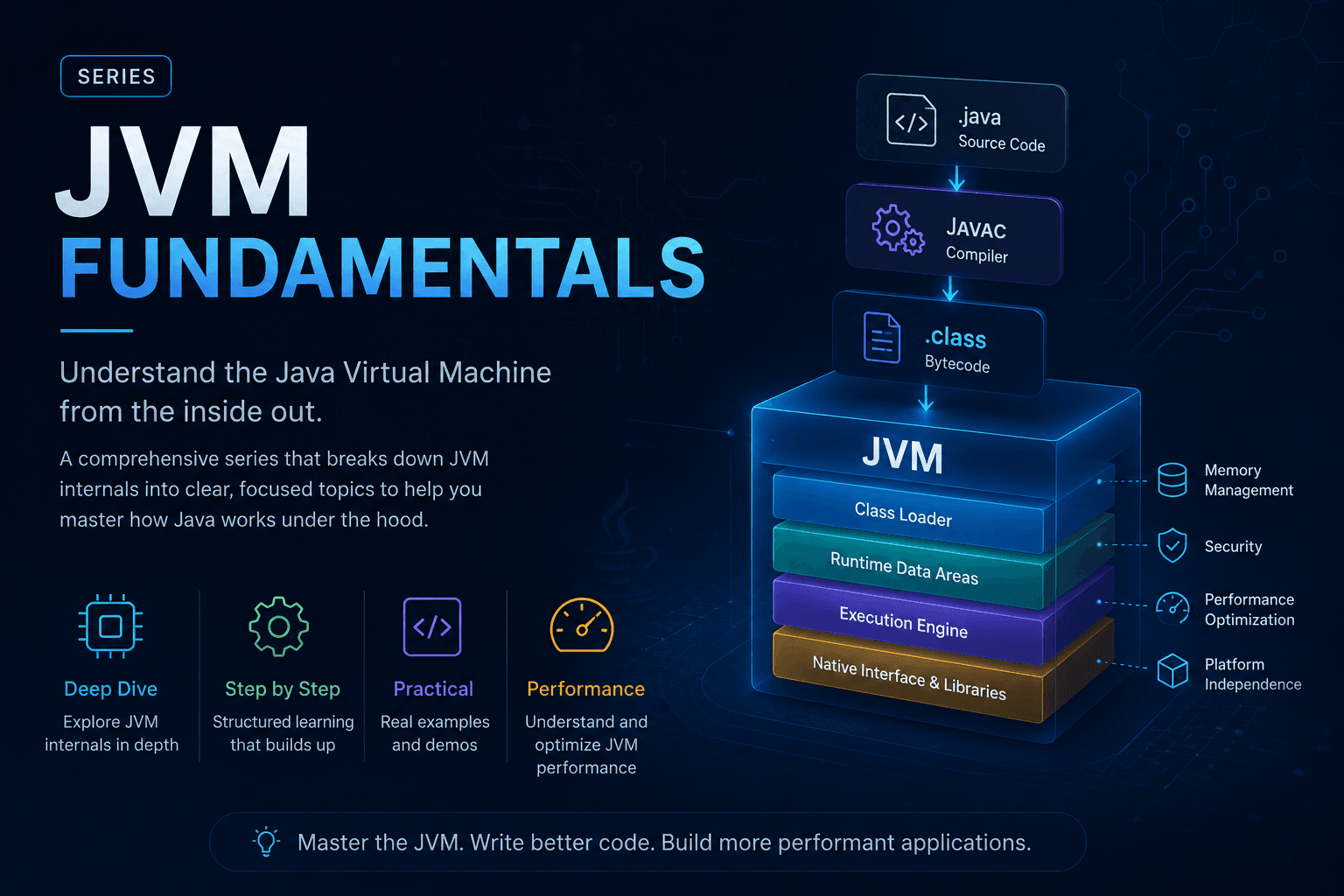
Understanding the **Java Virtual Machine (JVM)** is one of the most important foundations for any Java developer who wants to deepen their knowledge. The JVM is not simply a “black box” that runs Java applications. It is a sophisticated runtime system responsible for memory management, class loading, bytecode execution, and performance optimization through advanced compilation techniques. In this series, we will explore the internal components of the JVM in a clear and approachable way. Each article will focus on a specific topic while building upon the previous ones, helping you gradually understand how Java actually works under the hood.
 Part 1Jul 14, 2026class loaderjavajvm
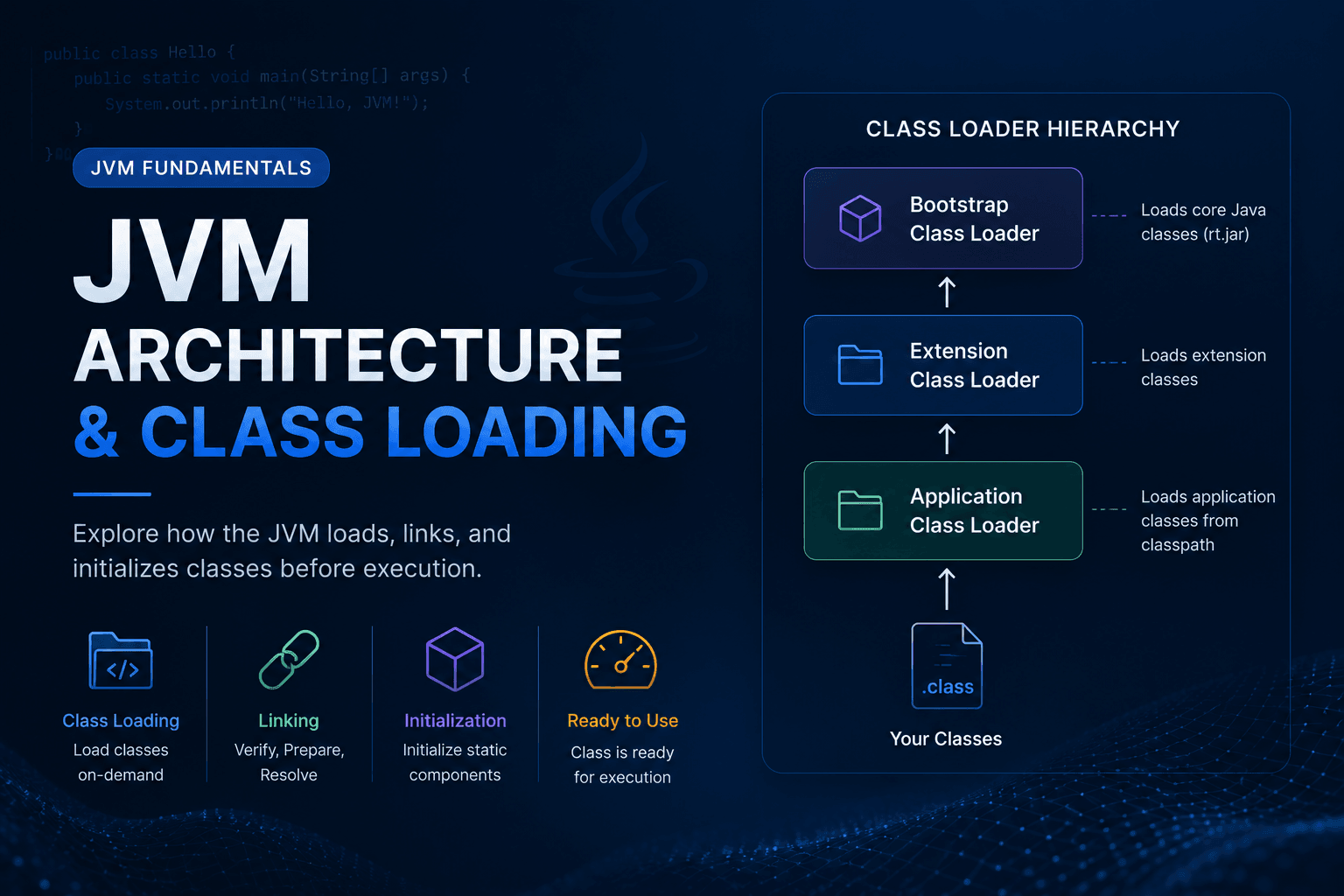
JVM Architecture & Class Loading - From Source Code to Class
Explore the architecture of the Java Virtual Machine (JVM) and learn how the Class Loader Subsystem dynamically loads classes. Understand Bootstrap, Platform, and Application ClassLoaders, the Parent Delegation Model, and the class loading process that powers every Java application.
 Part 2Jul 14, 2026heapjavajmmjvmmemorymetaspacestack
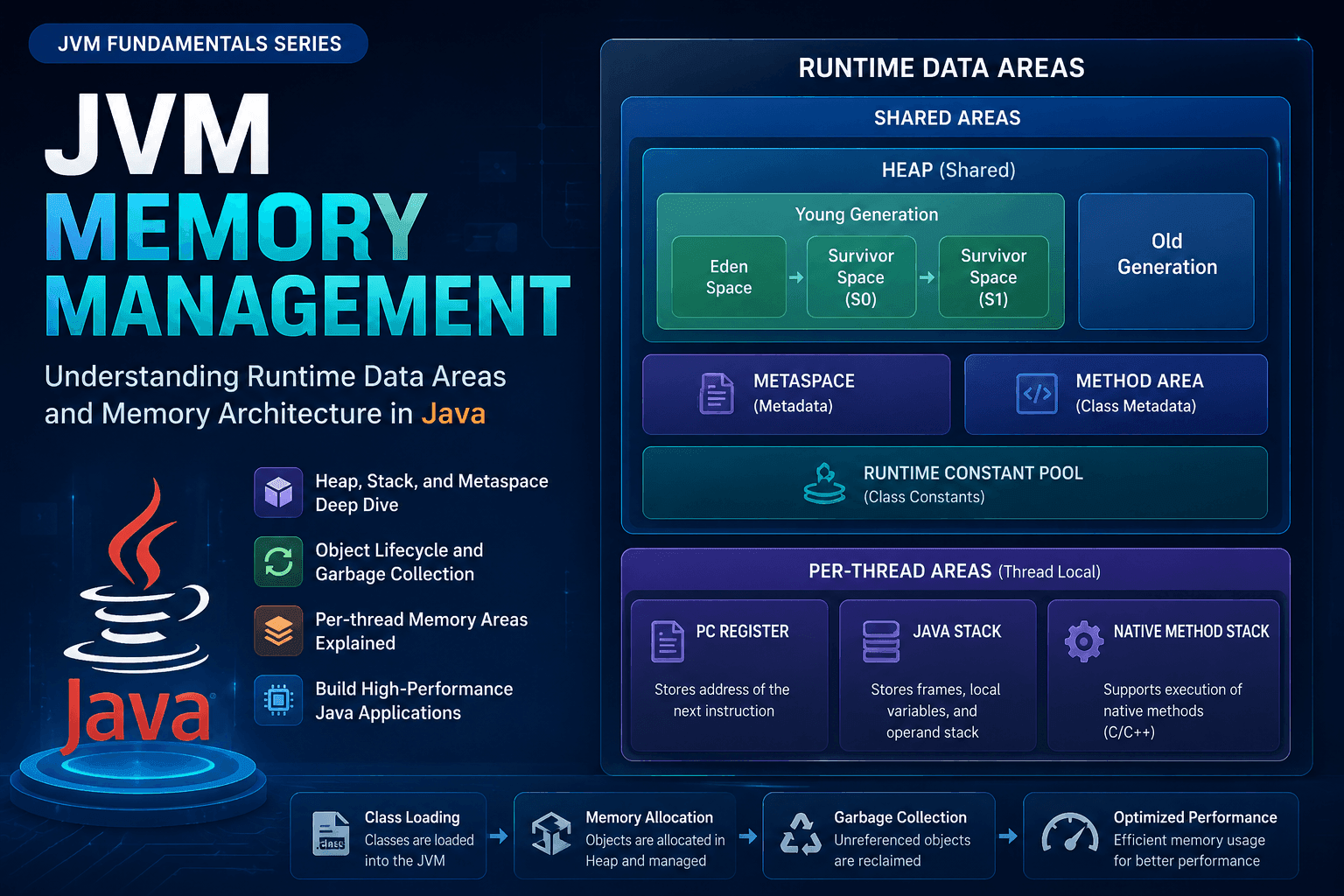
JVM Memory Management - Heap, Stack, and Runtime Data Areas
Explore the JVM memory architecture through Runtime Data Areas. Learn how the Heap, Stack, Method Area, Metaspace, and per-thread memory areas work together to manage objects, execute bytecode, and support Garbage Collection in Java applications.
 Part 3Jul 14, 2026execution enginegcinterpreterjavajitjvmperformance
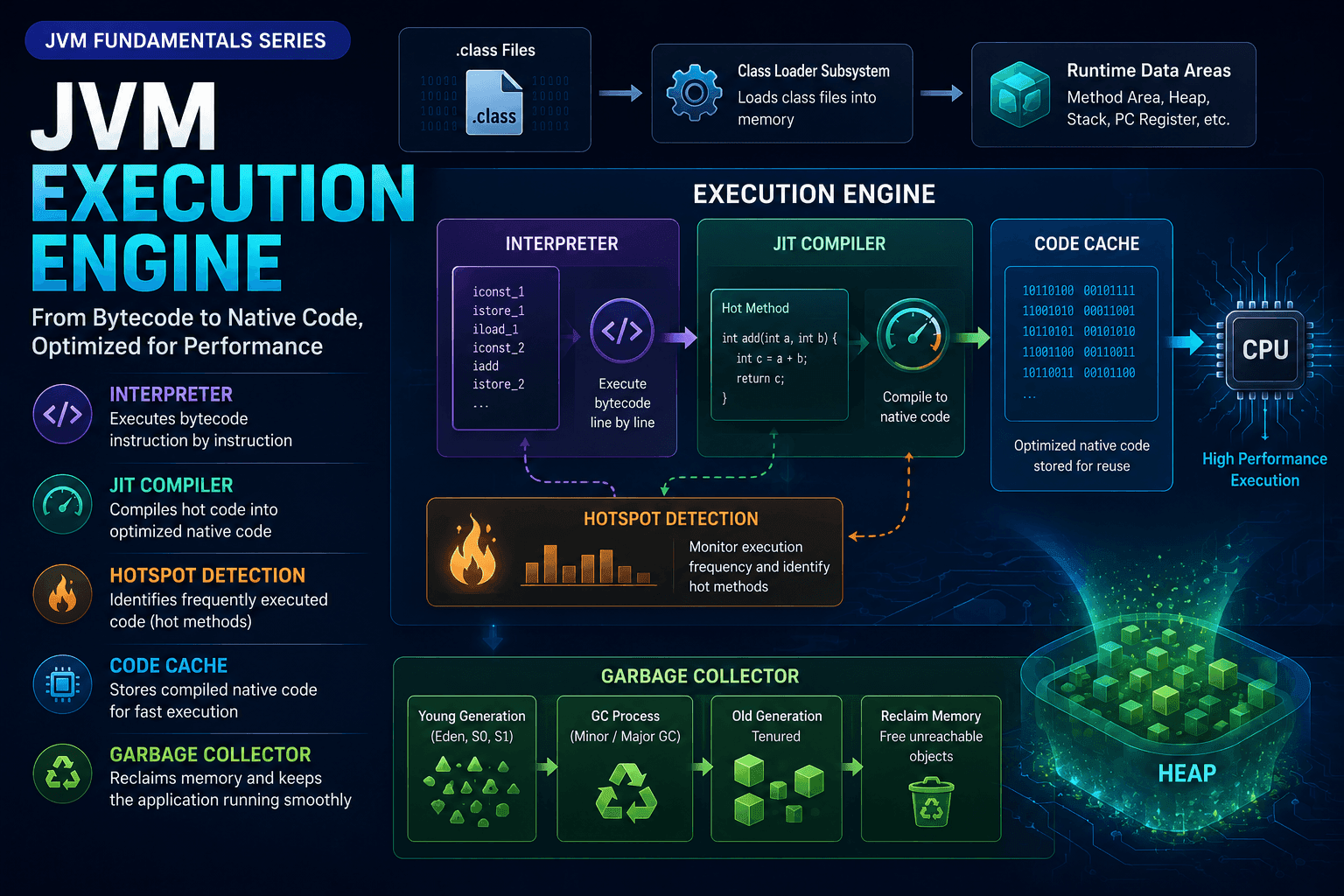
JVM Execution Engine - From Bytecode to Native Code
Explore how the JVM Execution Engine transforms bytecode into running code. Learn how the Interpreter, JIT Compiler, Code Cache, hotspot detection, and Garbage Collector work together to deliver high-performance Java applications.